Search

Metropolitan Buddhist

Category

Mantra

White Tara Mantra

tara-white-tibetan

White Tara (Sitatara) is associated with long life. Her mantra is often chanted with a particular person in mind. She’s another representation of compassion, and she’s pictured as being endowed with seven eyes (look at the palms of the hands, soles of the feet, and her forehead) to symbolize the watchfulness of the compassionate mind.

Unlike Green Tara, White Tara has both legs folded in meditation (Green Tara is stepping down onto a lotus).

For more information, click here.
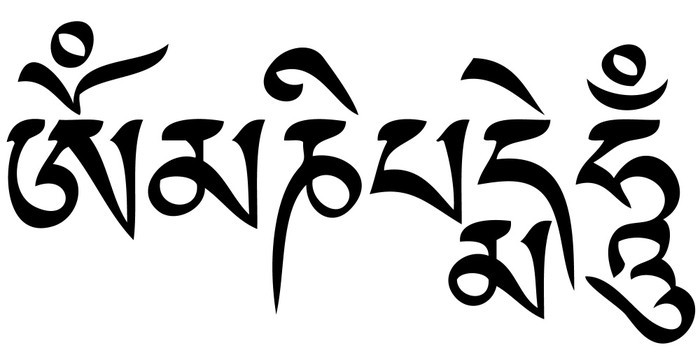
Avalokitesvara mantra

25669452

Oṁ Mani Padme Hūṁ / Om Mani Padme Hum

Avalokiteshvara (or Avalokitesvara) is a Bodhisattva who represents compassion, and his mantra also symbolizes that quality. Avalokiteshvara means “The Lord Who Looks Down (in compassion)”.

For more information on this mantra, click here.

Padmasambhava mantra

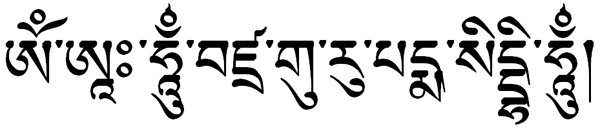
padmasambhava-uchen

Oṃ Āḥ Hūṃ Vajra Guru Padma Siddhi Hūṃ

(Om Ah Hum Vajra Guru Padma Siddhi Hum)

Padmasambhava was a historical teacher who is said to have finally converted Tibet to Buddhism. He was a renowned scholar, meditator, and magician, and his mantra suggests his rich and diverse nature.

More info here.

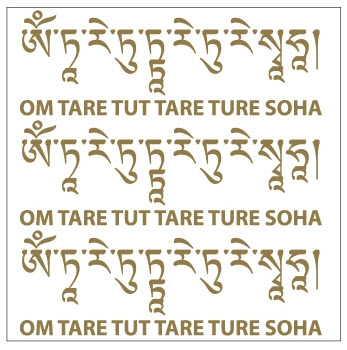
Green Tara Mantra

4-19-2016 9-12-50 AM

Tara, whose name means “star” or “she who ferries across,” is a Bodhisattva of compassion who manifests in female form. In Tibetan, Tara is known as “Dölma” (Sgrol-ma), or “She Who Saves.” In particular she represents compassion in action, since she’s in the process of stepping from her lotus throne in order to help sentient beings.

For more information on the meaning of this mantra [and Green Tara] click here.

What it is, what it was, what it shall be.

Your future is the interest on what you deposited in the past and present.

What it is, what it was, what it shall be…

Create a free website or blog at WordPress.com.

Up ↑